By Betty Hoover DiRisio, LCHS Volunteer.
First Published on March 5, 2019 on LCHS Facebook page
During World War II when the U.S. was deciding where to drop the atomic bombs in Japan, the location of Japan’s prisoner of war camps was a major consideration. Not wanting to harm U.S. or Allied Soldiers, the decision was made to make Hiroshima the first target as there were no known POW camps there. What wasn’t known at the time was that a dozen U.S. servicemen, pilots and their crews, had been taken captive and interred at Hiroshima. This is the story of two of the twelve men killed in the blast of Hiroshima, one from New Castle, and the other from Butler.
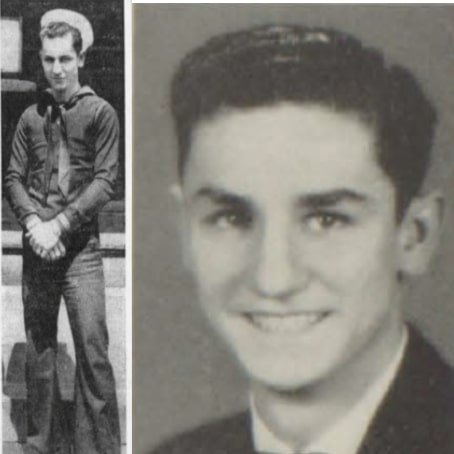
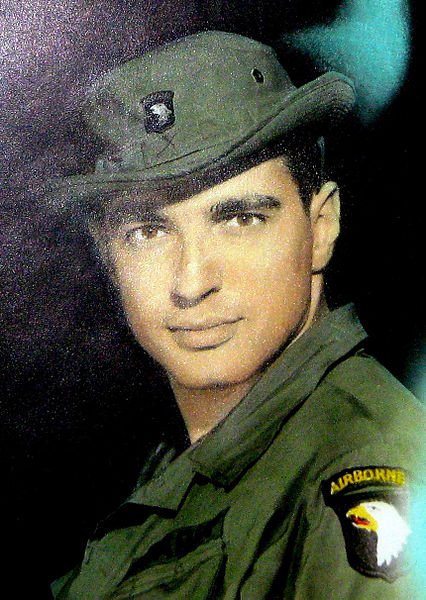
Corporal John A. Long, Jr.
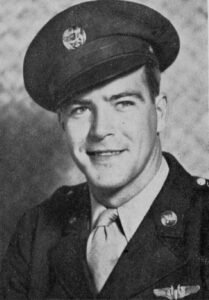
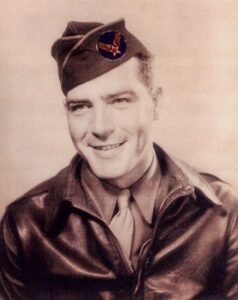
The first is John Alan Long, born in 1918, the son of John A. and Alma Long of Castlewood, Shenango Township, Lawrence Co, Pennsylvania. He graduated from Shenango High School and by 1939 he was a member of Troop K, 103rd Cavalry, Pennsylvania National Guard. He worked as a steelworker at National Tube in Ellwood City. On November 23, 1942 at Central Christian Church, he married his sweetheart Luella Rigby. He entered the US Army on October 28, 1943. Long graduated from the Army Air Forces Flexible Gunnery School, Army Air Field, Laredo, TX in September 1944, making him qualified to take his place as a member of a bomber combat crew. PFC Long received a pair of Aerial gunner’s silver wings and a promotion in grade. He was assigned as a nose-gunner on a B-24J-175 known as the “Lonesome Lady” which was assigned to the 866th Bomb Squadron of the 494th Bombardment Group of the 7th US Army Air Force. Lonesome Lady was brought into the Pacific Theater of Operations and completed 46 combat missions beginning 22 November 1944 and ending on 28 July 1945. She was shot down on July 28th while bombing the Japanese Battleship Haruna, in Kure Harbor. The plane took on enemy fire and the crew parachuted out. One crewman was killed when his parachute failed to open. Long was captured by the Japanese along with four other crew members and on July 29, 1945 were taken to Chugoku Military Police Headquarters, Hiroshima. He was later transferred to the Chugoku Area Army Headquarters, a short distance away. His pilot, also captured, was sent on to Tokyo for interrogation.
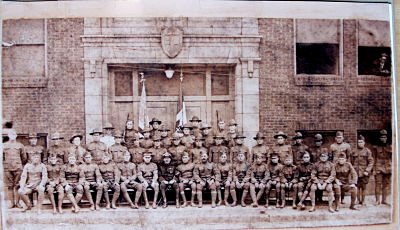
Crew of the B-24J-175 known as the “Lonesome Lady”
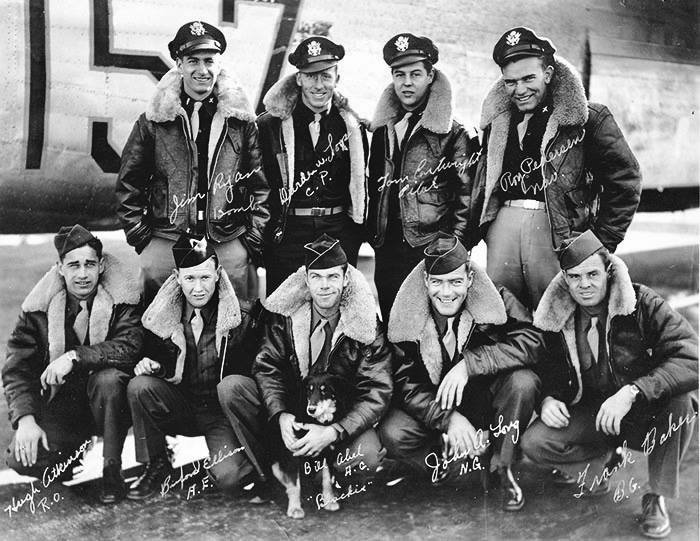
Corporal John A. Long, Jr. is in the first row, 2nd from right
Lieutenant (junior grade) (LTJG) Raymond L. Porter
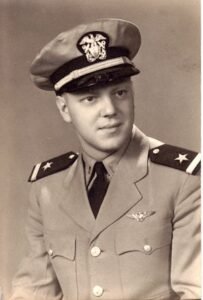
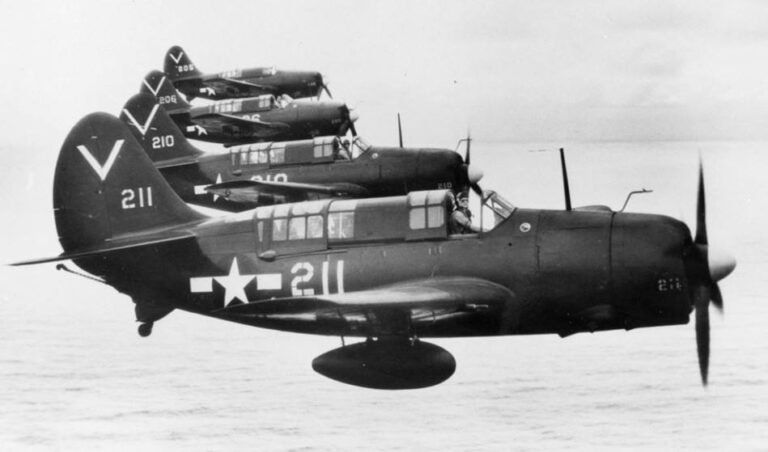
The second man is Raymond Lloyd Porter, born April 22, 1921 in Marian Township, Butler County, Pennsylvania. He graduated from Butler High School. Porter lived with his father, William B., and his siblings at 123 Sumner Ave. in Butler. Before joining the Navy on September 8, 1942 at Slippery Rock, PA, he worked at the Armco plant. He underwent active training at Slippery Rock, Iowa City, IA, St. Louis, MO, Pensacola Fl. Deland Fl, Chicago Ill and Norfolk, VA. After graduating from Naval Aviation school, he began flying a two-man USN SB2C-4E Helldiver torpedo bomber, operating from the U.S. Aircraft Carrier CV-14 Ticonderoga. On July 28, 1945, at 7:50 AM LT. Jr. Grade Raymond Porter and Aviation Radioman Petty Officer 3rd Class (ARM3) Normand Brissette, launched their plane. Their mission was part of the US Navy’s 39-plane attack on the Japanese Heavy Cruiser Tone. After unloading his payload (two 1,000 lb bombs and a 260 lb. fragmentary bomb) the plane took on anti-aircraft fire. Porter came up for rendezvous with his engine smoking badly, and he soon dropped off and was seen to make a water landing in a previously designated air-sea rescue ditching area. The two men were observed as being active and in good condition following the ditching. Porter and Bissette scrambled into a life raft and awaited rescue. Unfortunately, they were pulled from the water by the Japanese and held as POWs. They too were taken to Chugoku Military Policy Headquarters.
The Rest is History
And as they say, the rest is history for on August 6, 1945 at 8:15 AM the Enola Gay dropped the A-bomb on Hiroshima. Cpl. Long and Lt. Porter were interned very near the epicenter of the A-bomb. Bissette and one other man from Kentucky, were on latrine duty a few blocks away. They survived the initial blast, at least for a time, by jumping into a cesspool. Bissette died 13 days later of radiation exposure. Before dying, Bissette reported that the others died instantly after the bomb exploded.
These men are memorialized in a monument on the site of Chugoku Military Police Headquarters, one of 300 memorials in Hiroshima, but the only one built to honor American victims. It was built by and dedicated by Shigeaki Mori, a Japanese historian who survived Hiroshima, and spent his lifetime searching for the families of these American POWs. The words on the memorial were written by the pilot of the Lonesome Lady, who had survived because he was separated from his men and taken to Tokyo to be interrogated: “The atomic bomb devastated the city and its people with a force beyond any known before. US Air Force and US Navy airmen interned as POWs at the Chugoku Military Police Headquarters, which was located at this site, near the epicenter, were among the victims. This plaque is placed in the memory of these brave and honorable men. May this humble memorial be a perpetual reminder of the savagery of war.”
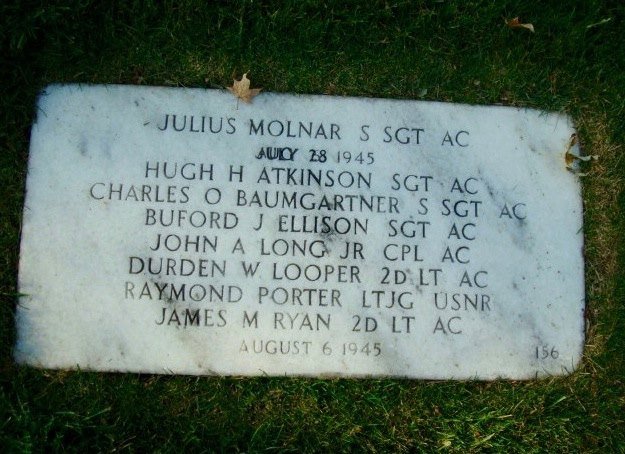
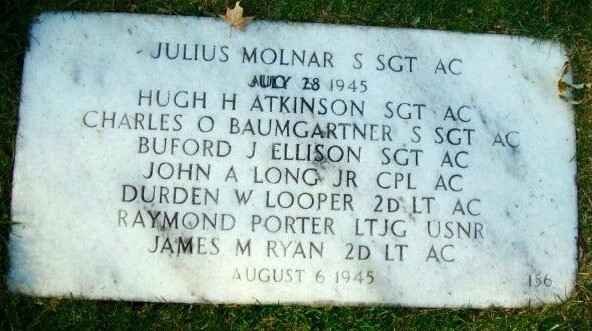
The remains of eight of these POWs were turned over to U.S. Authorities on December 6, 1945. Their funeral was held November 3, 1949 at the Jefferson Barracks National Cemetery, St. Louis, Mo. Ironically, Long and Porter grew up a few miles apart and probably never met prior to Hiroshima. They joined the service; went to war; were captured by the enemy thousands of miles away; tragically and accidentally fell to the effects of the atomic bomb; and as fate has it these two local heroes will spend eternity (along with six others) together in a common grave.
In 2004, Corporal Long’s photo was the first of an American to be added to 9,000 other photos contained in the Hiroshima memorial for victims. His great nephew, a teacher in Tokyo presented the photo.
PHOTOS: Corporal John A. Long, Jr. (2 images); Lonesome Lady Crew; Lieutenant (junior grade) (LTJG) Raymond L. Porter; SB2C Helldiver #210 flown by Porter and Aviation Radioman Petty Officer 3rd Class (ARM3) Normand Brissette (in photo it is the second plane from the bottom) ; grave marker
MORE INFORMATION
Aviation Radioman Petty Officer 3rd Class (ARM3) Normand Brissette
https://hiroshima-pows.org/brissette
Corporal John A. Long, Jr
https://hiroshima-pows.org/john-long
Lieutenant (junior grade) (LTJG) Raymond Lloyd Porter
https://hiroshima-pows.org/chapter-3-page